LivePage
Website
LivePage is a Ukraine-based digital marketing agency specializing in SEO, PPC, content marketing, and UI/UX services for Tech, SaaS, and eCommerce companies. With over 12 years of experience, the agency works with international clients and is recognized by platforms like Clutch, GoodFirms, and Google Partner.
Client
LivePage
Services
UI & UX Design
Industries
Digital Marketing
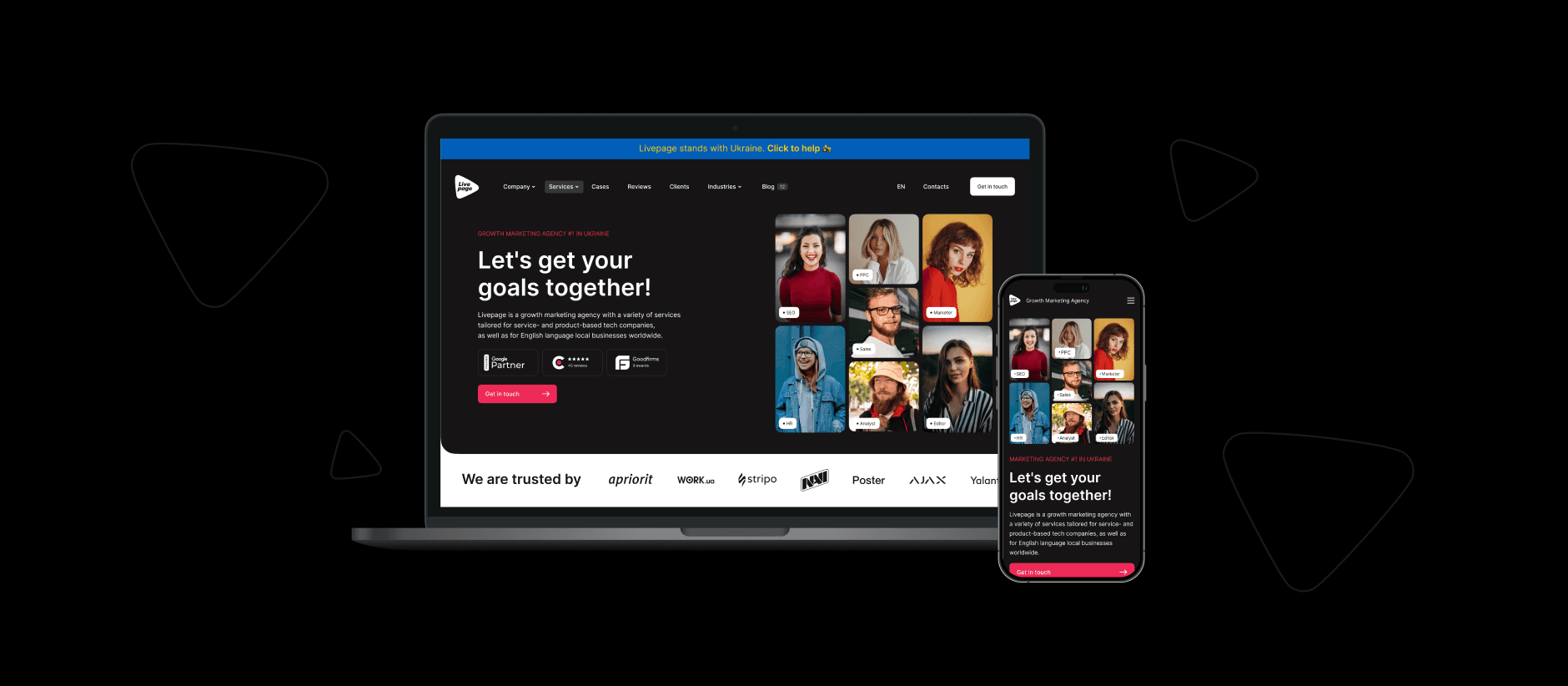
📍 Problem
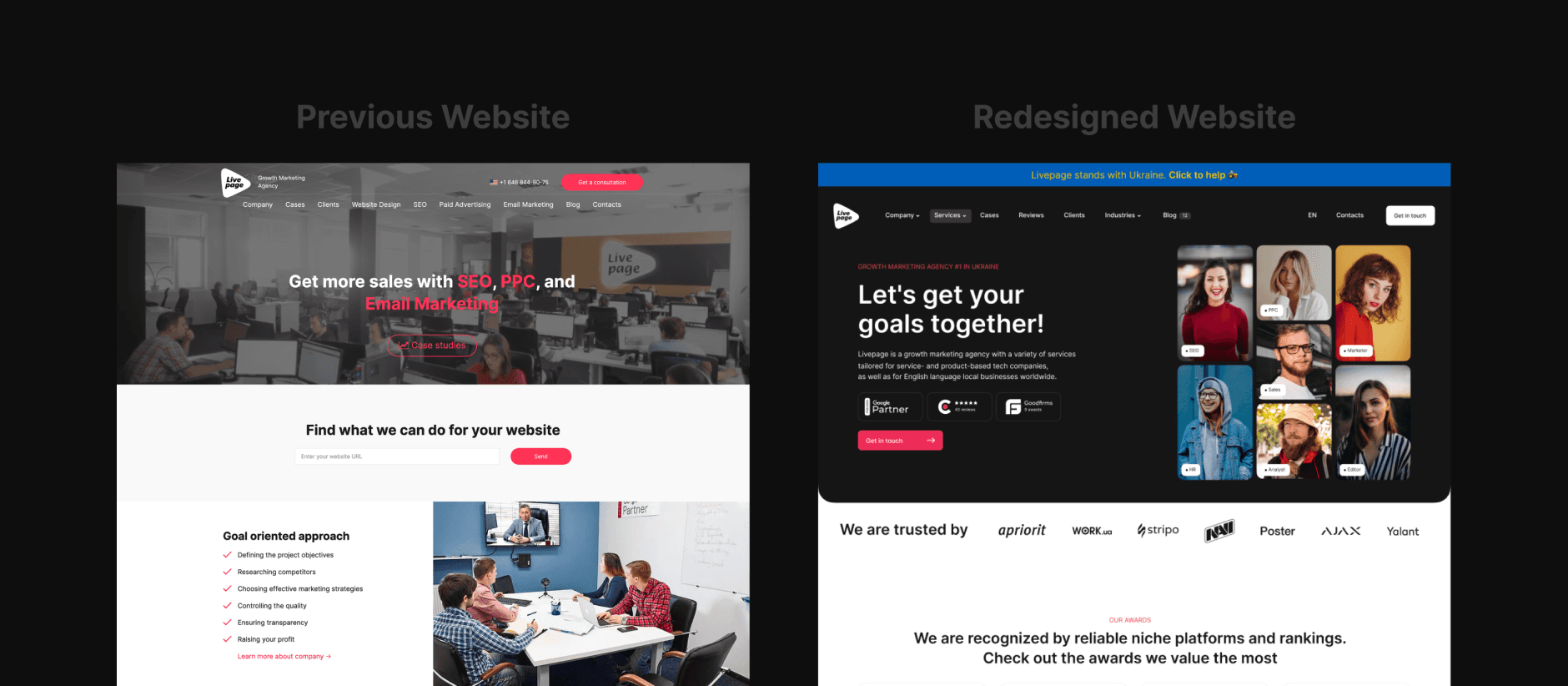
From a UX perspective, the website lacked a clear information hierarchy and visual structure. Important content was difficult to scan, and users had to invest extra effort to understand services, expertise, and credibility.
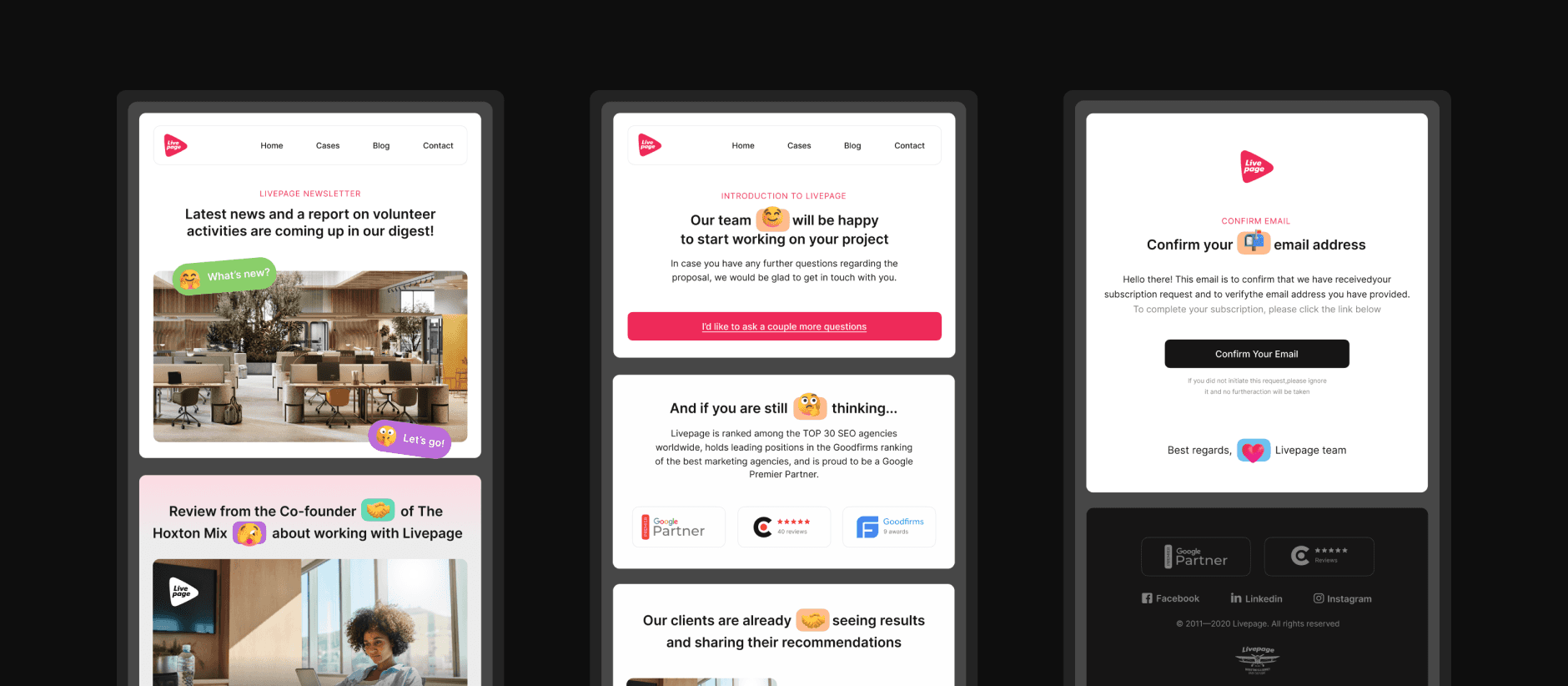
Inconsistencies across pages and supporting materials such as emails made the experience feel less unified, reducing clarity and overall confidence in the product.
🎯 Goal
The goal of the project was to redesign the website experience to clearly communicate LivePage’s value within the first few seconds, strengthen trust through structure and visuals, and support lead generation.
In parallel, the project aimed to create a unified design system that would allow the team to easily scale the website and marketing materials while maintaining consistency across all digital touchpoints.
⚡ My Role
As part of the UX/UI design team, I was involved across key stages of the design process, from early research and structural decisions to interface design and refinement. Throughout the process, design decisions were shaped collaboratively and validated through feedback and user testing, allowing the solution to evolve iteratively.
Below is an overview of the key stages of the process
Competitor Research
I conducted competitor research to analyze how digital agencies communicate their value, structure content, and establish trust. By reviewing positioning, layout patterns, and trust signals such as case studies and client recognition, I identified common industry standards and areas of opportunity.
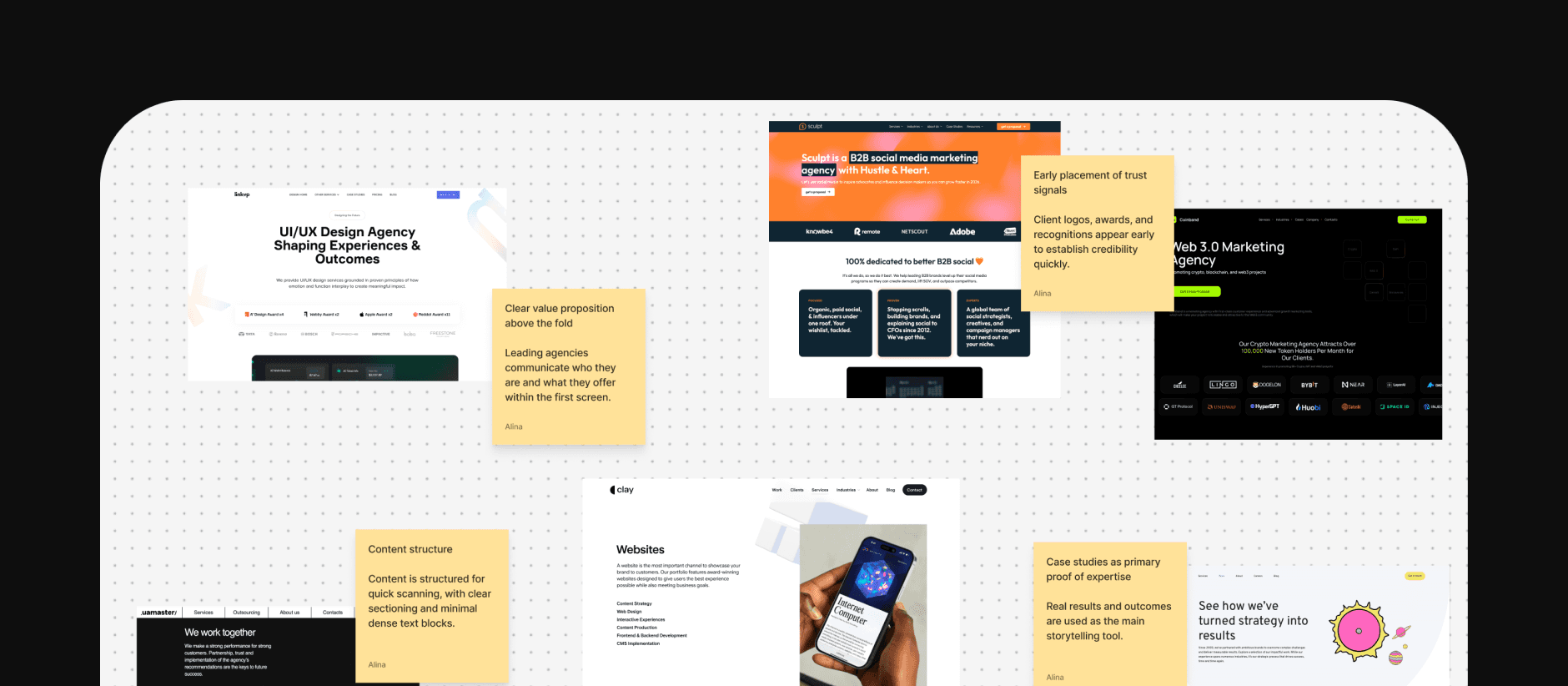
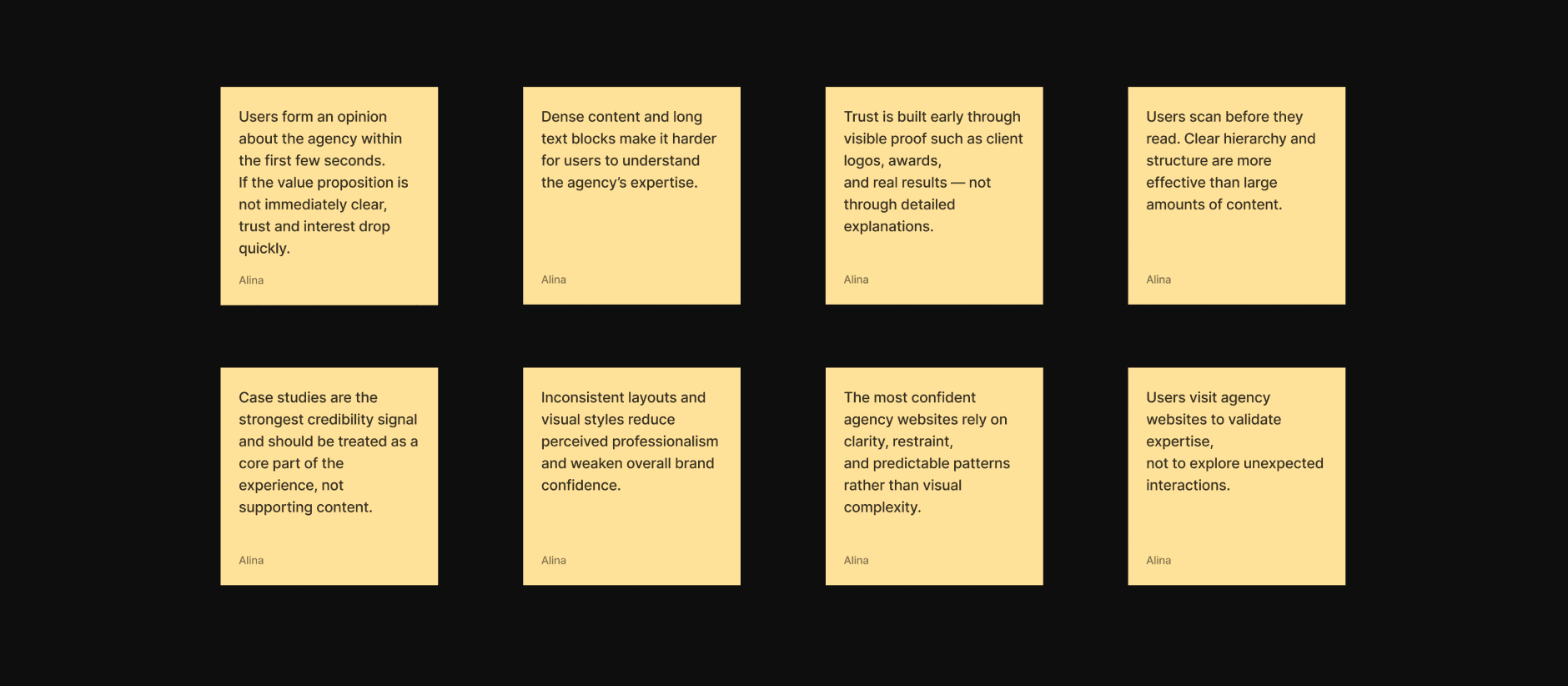
Research result
After analyzing competitors, I translated research observations into clear UX insights. These findings guided the information architecture and visual decisions in the next stages of the project.
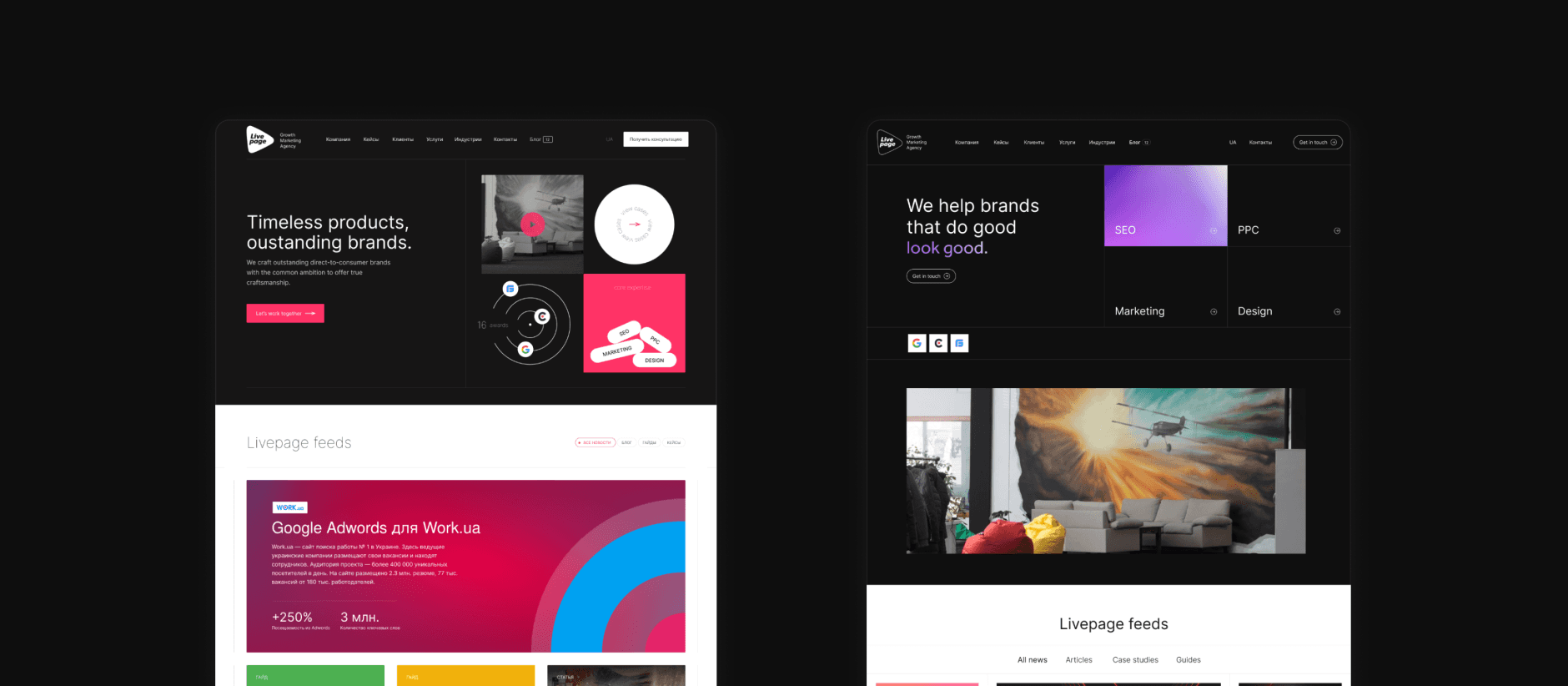
Wireframes / Drafts
Using the research findings, I experimented with different layout concepts and wireframe drafts to explore how content could be structured and presented most clearly.
After exploring different concepts, I refined the selected direction by aligning structure, hierarchy, and visual language across both desktop and mobile layouts. The focus was on creating a clear and cohesive foundation that would work consistently across devices before finalizing the design.
User testing
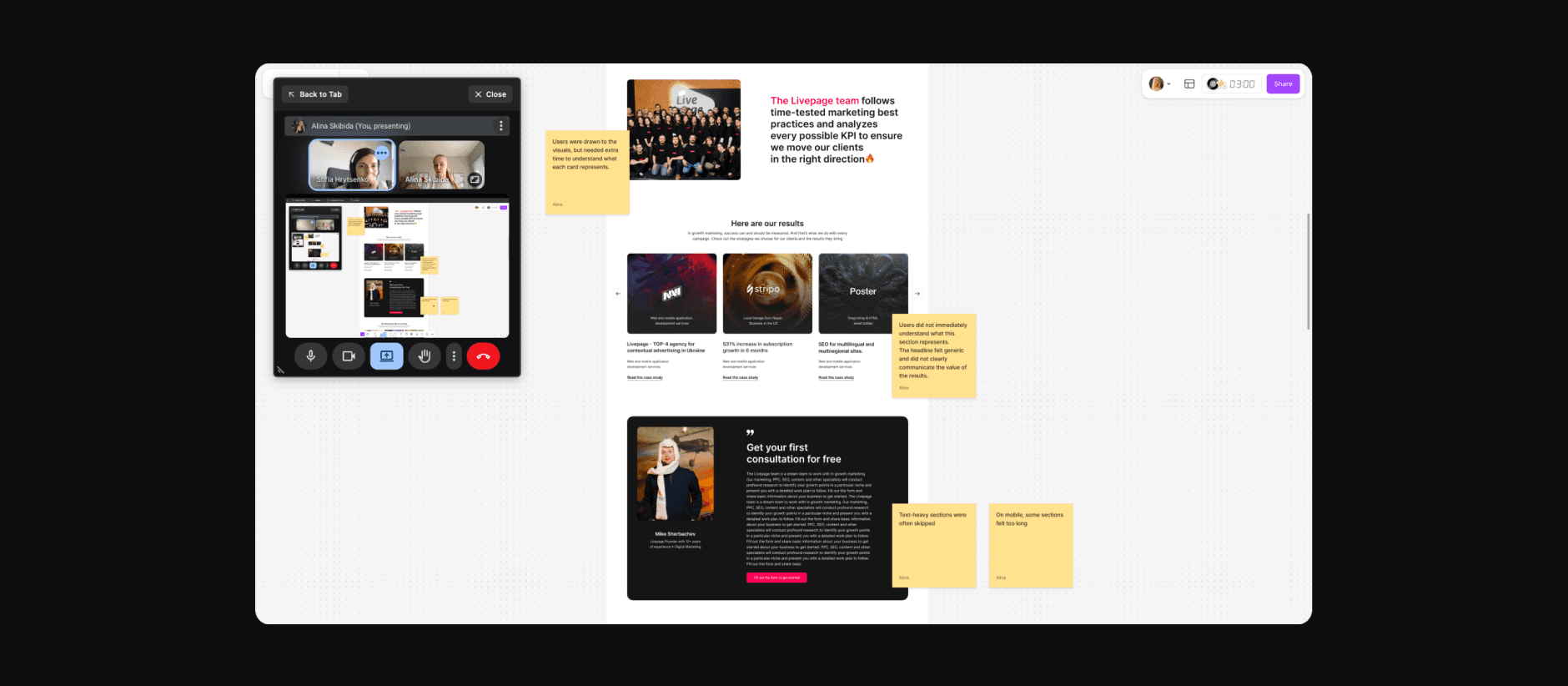
To validate the refined layouts, I conducted moderated user testing sessions via video calls. During each session, participants navigated through the interface while sharing their thoughts out loud. I observed their behavior, noted points of confusion, and identified areas where content or structure felt unclear. These insights were then used to refine the design and address usability issues before finalizing the interface.
Final Desings
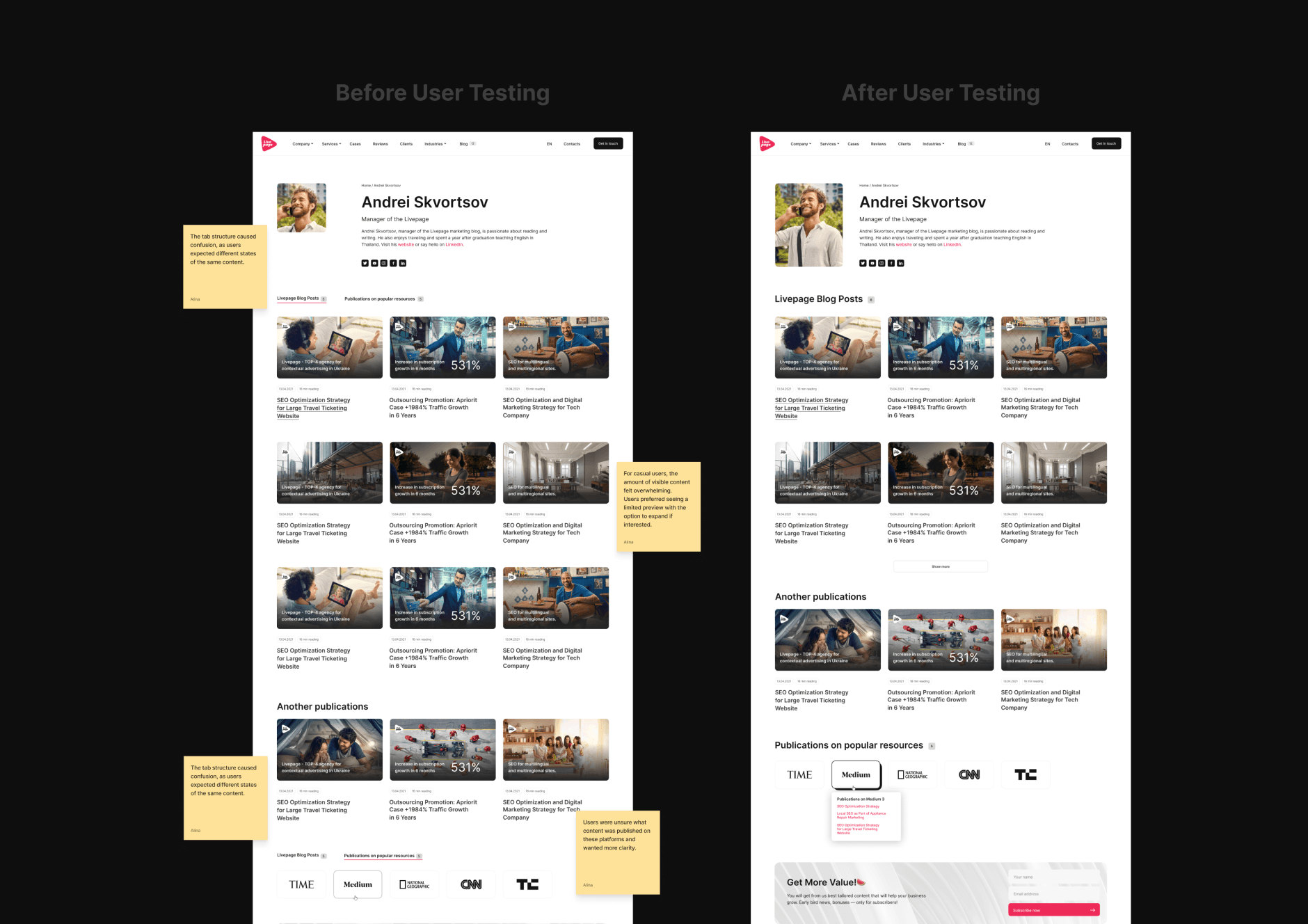
Following user testing, the design evolved through targeted refinements based on user feedback. The adjustments addressed clarity, content structure, and interaction patterns, helping the interface move closer to a final, production-ready state.
Design System Foundations
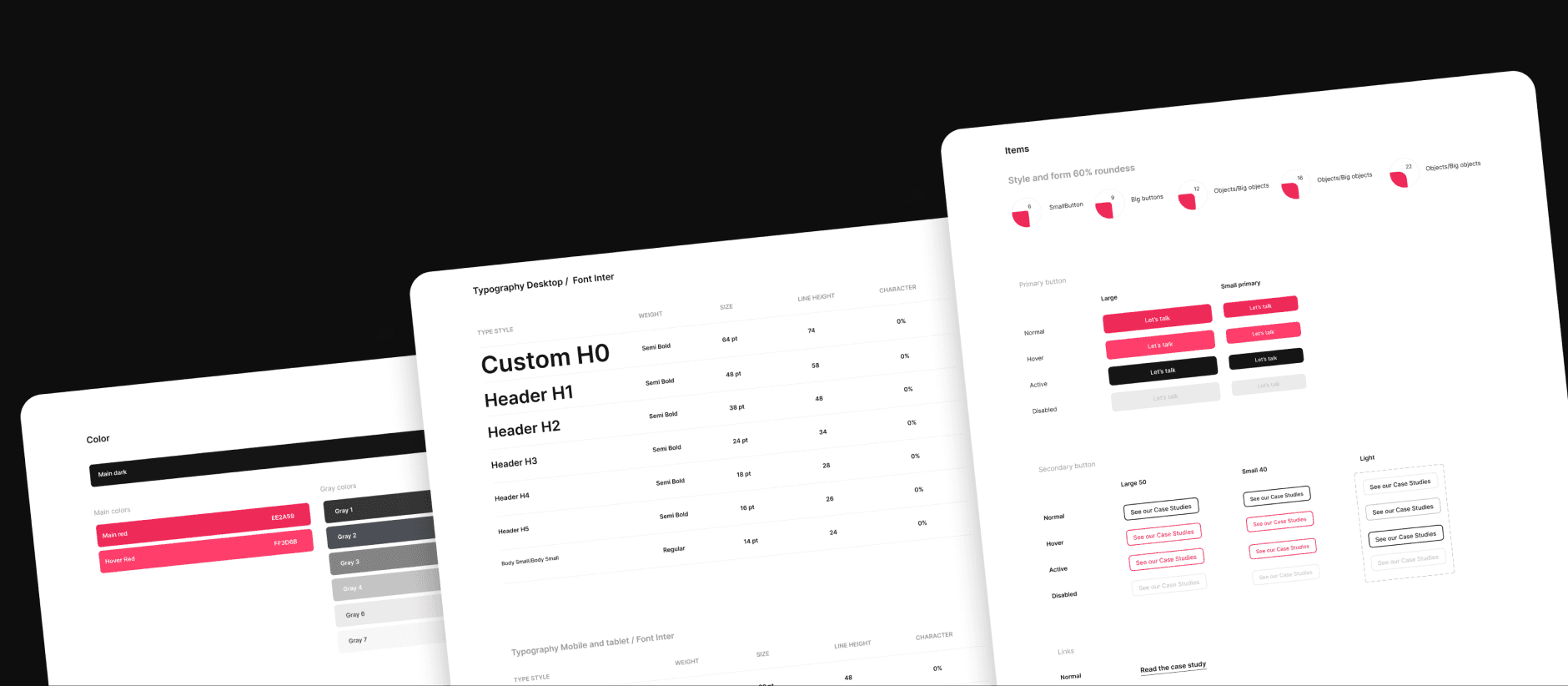
Design system foundations were developed alongside the product design process. Key patterns, tokens, and reusable elements were shaped incrementally to maintain consistency and support scalable interface decisions.
By evolving the foundation throughout the project, the design remained cohesive and adaptable, providing a stable base for continued iteration and future growth.
Prepare for DEV hand off / File summary
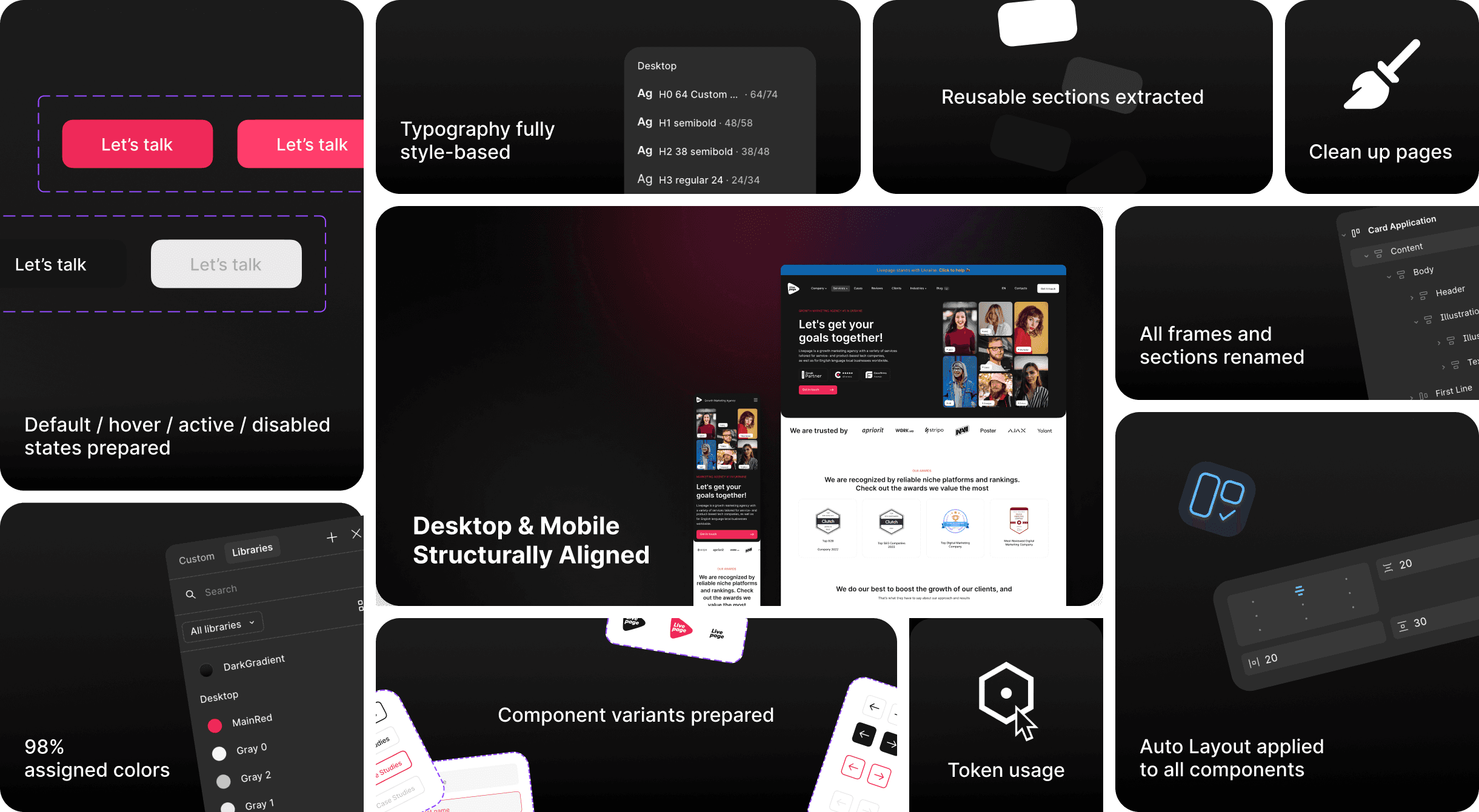
The final design was prepared for development handoff, ensuring a smooth and consistent implementation.
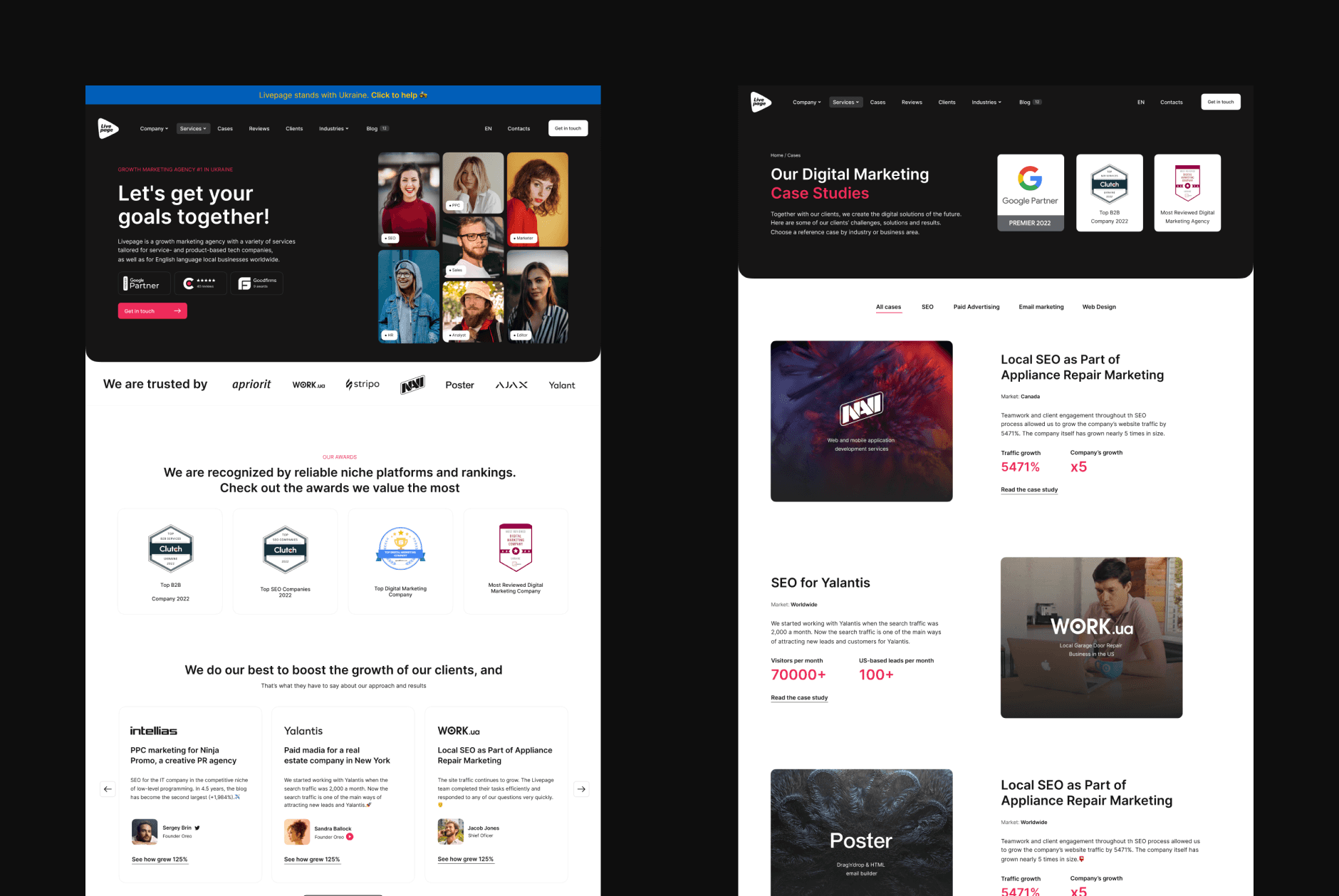
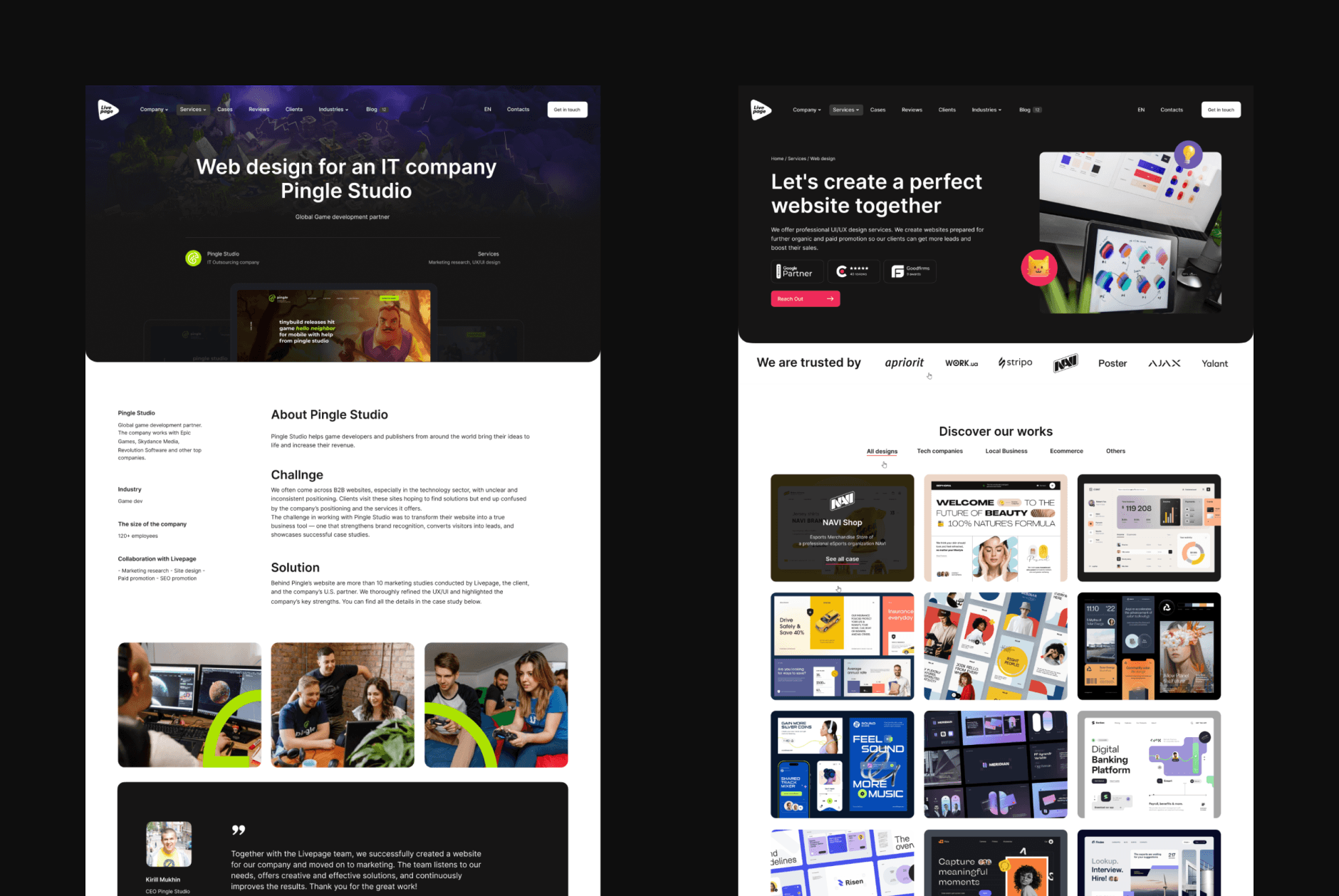
Desktop resolution
As a result of the full design process, the final desktop pages were defined and finalized.
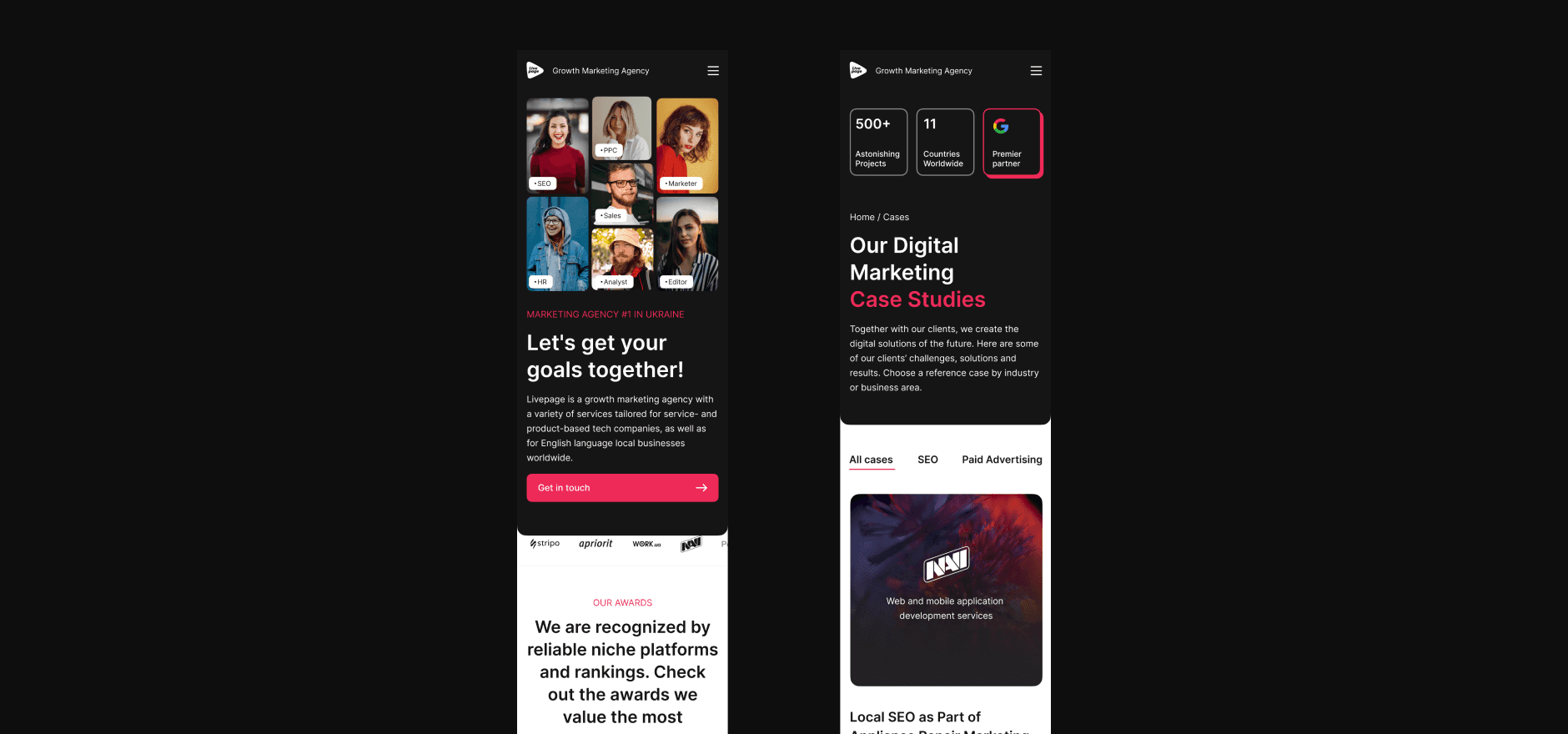
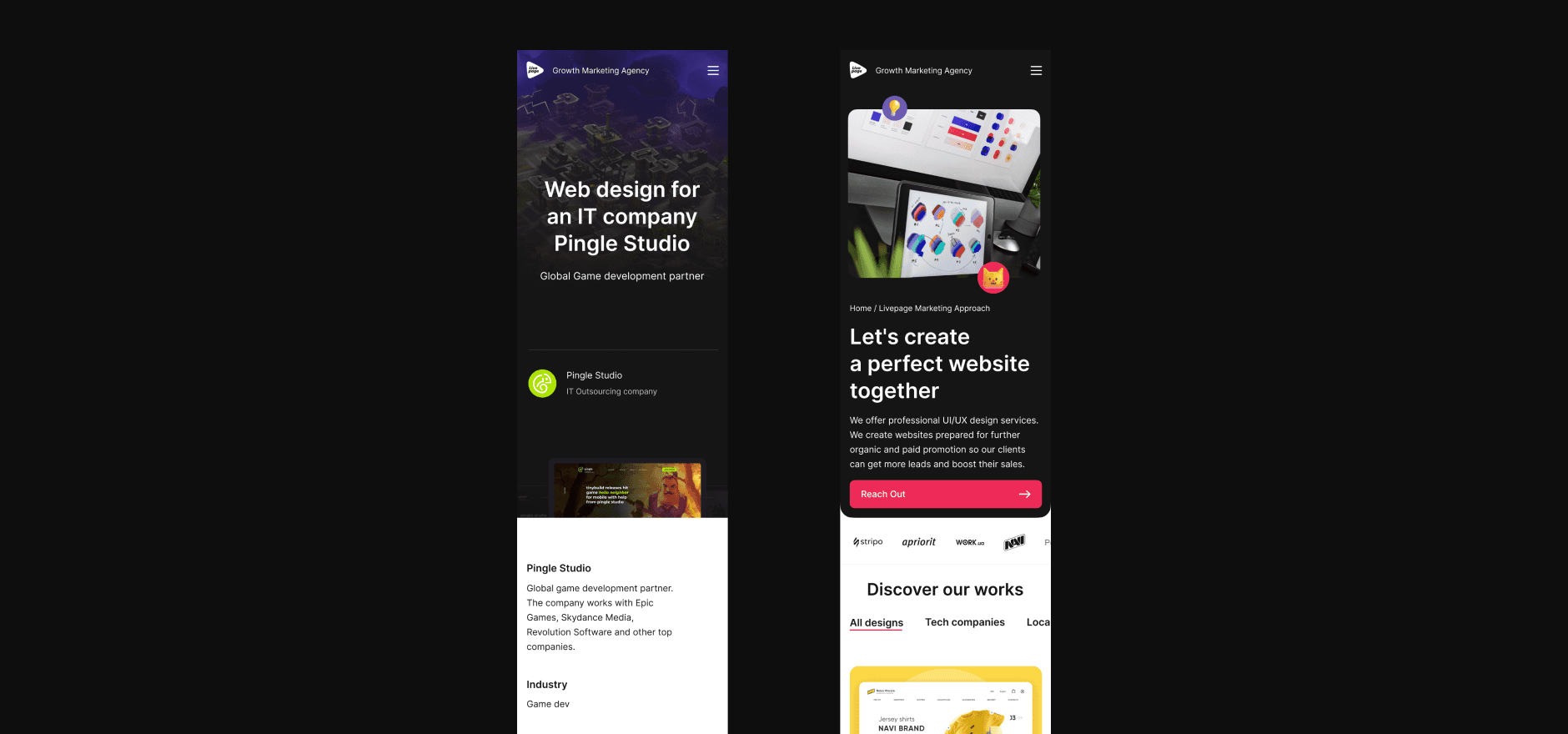
Mobile resolution
Final mobile pages developed alongside the desktop experience.
Final Outcome
This project involved a full redesign of the website, from research and exploration to final delivery. The process included competitor analysis, information architecture restructuring, concept exploration, user testing, iterative refinement, and preparation for development handoff. The final outcome is a cohesive and structured website experience designed to clearly communicate value, support usability, and remain consistent and scalable across desktop and mobile.
Marketing Assets
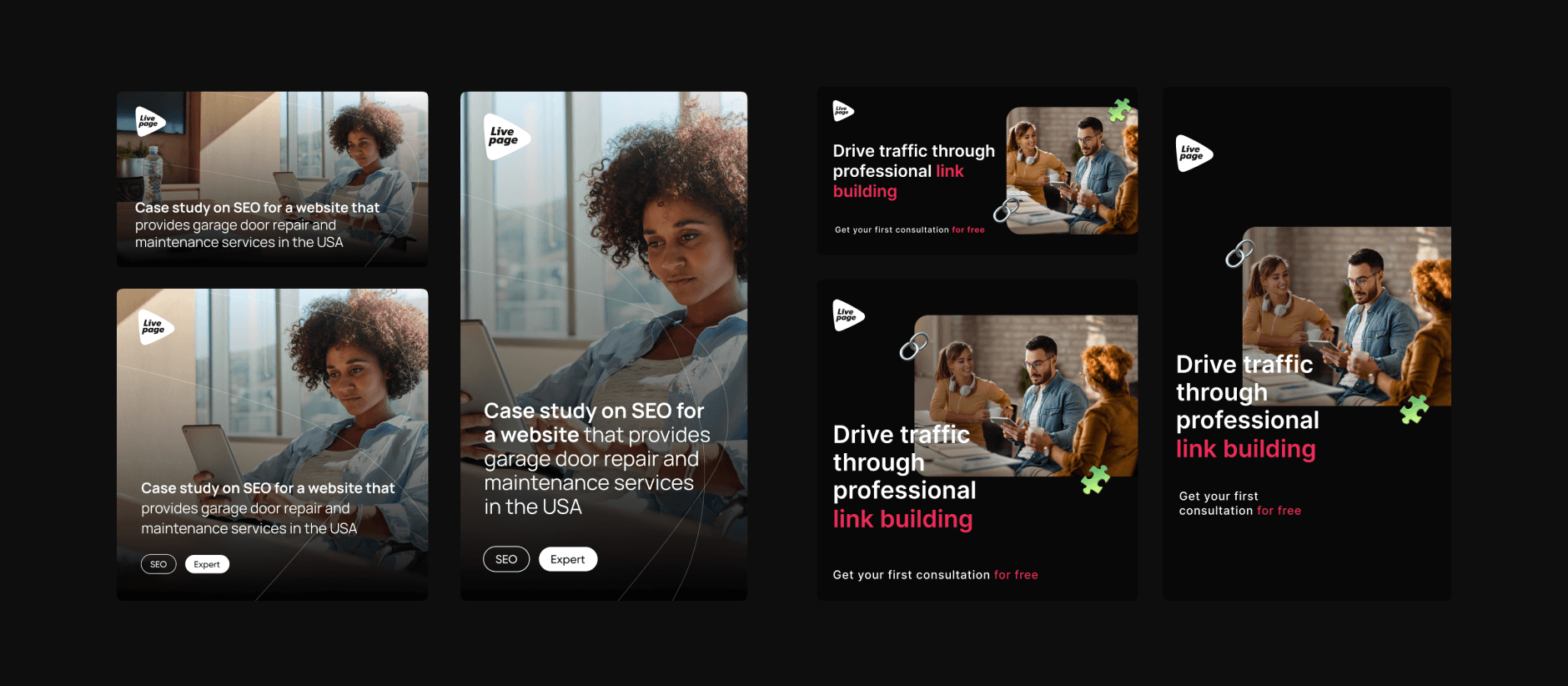
Beyond the website, additional marketing assets were designed to maintain a consistent brand presence.
✦
If you’d like to learn more about this project or discuss the approach in more detail,
LET'S CONNECT
I conducted competitor research to analyze how digital agencies communicate their value, structure content, and establish trust. By reviewing positioning, layout patterns, and trust signals such as case studies and client recognition, I identified common industry standards and areas of opportunity.